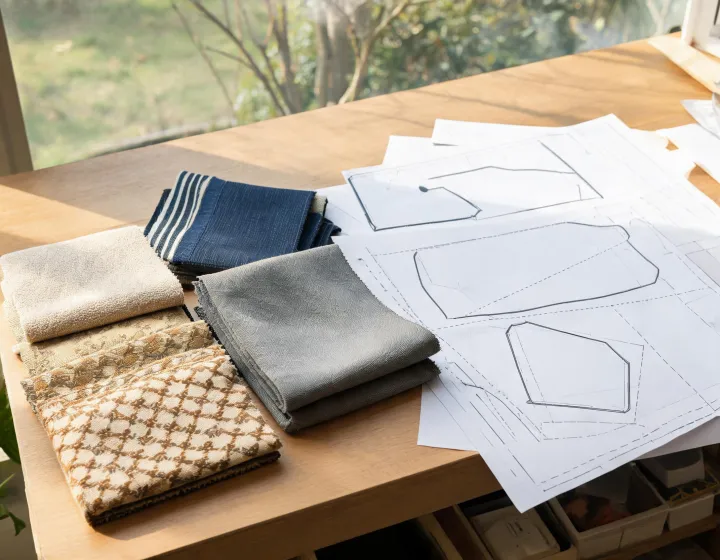
The application changes the acceptance question
Awning panel development
A shade-product buyer needs coordinated color across several panels. The comparison should record fiber composition, fabric construction, usable width in cm, GSM in g/m² and dye lot. Request the supplier's proposed lightfastness or weathering method and edition, exposure conditions, sample identity and pass threshold. The review outcome is an agreed test plan or a visible open question, not a claimed service lifetime.
Patio seating upholstery
For a cushion program, compare abrasion resistance, pilling, cleaning conditions and hand feel alongside water behavior. Stock cloth may support earlier swatch selection when its construction fits; custom finish can address a particular brief but adds approval steps and possible minimums. Review a cut-and-sewn sample before accepting drape, seam appearance or backing compatibility. Fabric testing alone cannot establish complete cushion behavior.
Protective equipment covers
A cover converter can request tear strength, tensile strength, coating orientation and hydrostatic pressure conditions for the exact offered article. Folding, stitch perforations and joined seams can introduce leakage paths outside a fabric-only assessment. Compare coated and uncoated proposals for mass, flexibility, sewing method and relevant moisture vapor transmission requirements; avoid treating water repellency as an interchangeable waterproof claim.
Define the comparison dimensions
| Decision | Stock construction | Custom development |
|---|
| Specification fit | Accept declared construction or record deviations | Agree target composition, weave, GSM and tolerance |
|---|
| Sampling | Confirm swatch represents the offered article | Agree lab dip, strike-off and pre-production stages |
|---|
| Commercial scope | Confirm lot availability, roll lengths and shade policy | Confirm minimum per color and approval-dependent timing |
|---|
| Budget | Check useful cutting width before comparing unit price | Separate setup, testing and development charges |
|---|
For either route, retain a sample identifier, conditioning basis, chosen method edition and buyer acceptance criteria. The ASTM textile standards index helps locate methods; it is not evidence that a proposed fabric passed. See the Specification Guide and procurement article.