Specification Guide / outdoor textile review sheet
Outdoor fabric suppliers: ask for the exact article
A useful supplier comparison ties each answer to a material reference. This guide turns a generic outdoor-fabric request into fields that can be checked before sampling and bulk approval.
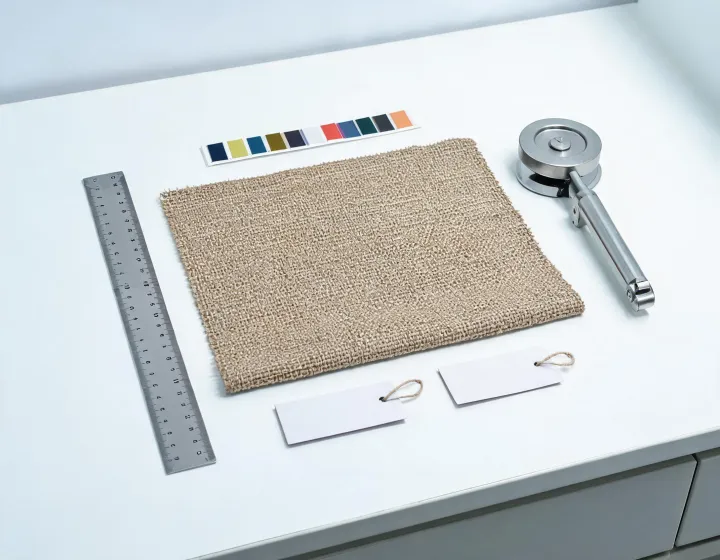
Write values, units and open items
| Field | Request format | Review action |
|---|---|---|
| Fiber composition | % by fiber; declared construction | Match specification to quoted article |
| Weight and usable width | g/m² or oz/yd²; cm or in; agreed tolerance | Exclude selvage unless the buyer agrees otherwise |
| Quantity | m, yd or rolls, per color and total | Confirm roll length and shade-lot grouping |
| Water behavior | Hydrostatic pressure or other agreed water test basis | State method edition, specimen state and threshold |
| Comfort and exposure | Moisture vapor transmission and UV requirement where applicable | Record conditions and limitations before interpreting values |
Keep three approvals separate
Construction screening: review a swatch for weave, hand feel, weight and finish. Record its article code and whether it came from an offered stock lot or development sample. A visual match does not establish tensile strength or weathering performance.
Color and process approval: agree a lab dip for color or a strike-off for printed work. Specify the light source and reference identification with the proposed supplier. Coating, backing and finishing changes can affect shade, stiffness and sewability, so ask which processes the sample represents.
Bulk-lot acceptance: define roll inspection, shade grouping, test specimens and an agreed AQL basis where relevant. Retain the approved reference and document any permitted deviation. A pre-production sample does not automatically represent every delivered roll.
Read the claim beside its evidence
A family brochure is useful for narrowing options, while an exact-article report supports a purchase decision. Request the method and edition, laboratory, date, conditioning, specimen identity and acceptance threshold. Water repellency, resistance to hydrostatic pressure and seam leakage address different questions; moisture vapor transmission results need their stated test conditions. Do not rank reports from different methods as if their values were directly equivalent.
Stock programs may suit a budget when their declared construction fits. Custom programs can align finish and usable width but require minimums, development charges and approval gates. Compare total usable yield, freight and testing with price per yard or meter. High-end, mid-range and budget remain buyer preferences rather than verified supplier ratings.
Use AATCC method listings and the ASTM textile index as method references, not product endorsements. Review inquiry options, coordination steps and the full procurement brief.
Submit the specification gaps with your request
List the fields you know and mark the ones needing supplier proposals. Include composition, construction, weight, width, quantity, US destination, sampling date and test evidence needs so alternatives can be assessed on an explicit basis.
Review your procurement brief